

Car safety has come a long way since the days when vehicles barely had any protective features. Today, thanks to decades of innovation and technological leaps, modern cars are equipped with sophisticated safety systems designed to keep drivers and passengers safer than ever. But how did we get here? From the humble seatbelt to the rise of artificial intelligence in vehicles, the journey of car safety is fascinating and ongoing. Let’s take a look at how these life-saving features have evolved over the years.
The Birth of the Seatbelt
It all started with the seatbelt—a simple, yet revolutionary invention. Introduced widely in the 1950s and made mandatory in many countries by the 1970s, seatbelts drastically reduced injuries and fatalities during crashes. Initially, many drivers resisted wearing them, but as statistics showed their effectiveness, seatbelts became a standard safety feature. Today, three-point seatbelts are a given, saving countless lives every year.
Airbags: The Cushion of Safety
Airbags were the next big leap in passive safety features. First appearing in the 1970s but becoming widespread in the 1990s, airbags provide a cushion to reduce the impact force on passengers during a collision. Modern vehicles often have multiple airbags—including front, side, curtain, and knee airbags—designed to protect occupants from all angles. This innovation has further reduced fatality rates and serious injuries.
Advanced Driver Assistance Systems (ADAS)
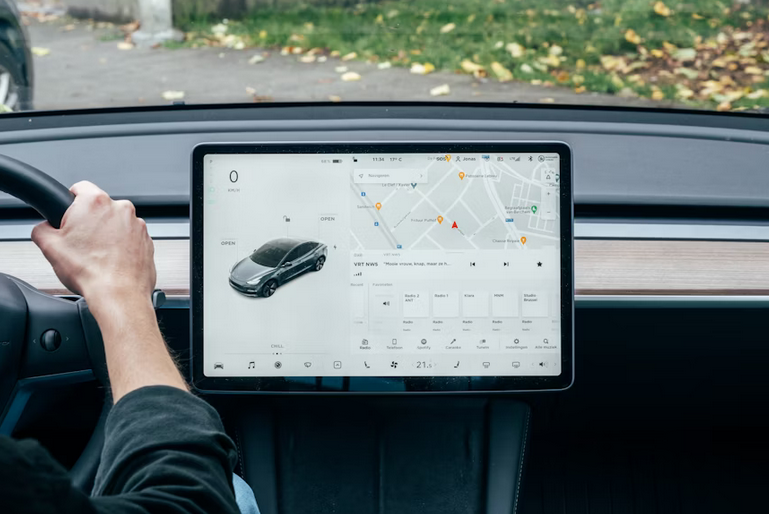
The last decade has seen the rise of Advanced Driver Assistance Systems (ADAS), a group of technologies that actively help drivers avoid accidents. Features like lane departure warnings, adaptive cruise control, blind-spot monitoring, and automatic emergency braking are increasingly common. These systems use cameras, radar, and sensors to monitor the vehicle’s surroundings and alert the driver or even take corrective action when necessary.
Anti-lock Braking Systems (ABS)
While seatbelts and airbags protect during a crash, avoiding accidents altogether became a bigger focus with the development of Anti-lock Braking Systems (ABS) in the 1980s. ABS prevents wheels from locking up during hard braking, helping drivers maintain steering control and avoid skidding. This technology has become standard on almost every car, playing a crucial role in accident prevention.
Electronic Stability Control (ESC)
Building on ABS technology, Electronic Stability Control (ESC) helps prevent dangerous skidding and loss of control in slippery conditions or emergencies. By selectively braking individual wheels and adjusting engine power, ESC keeps cars on their intended path. Since its introduction in the early 2000s, ESC has been credited with significantly lowering rollover crashes and is now mandatory in many countries.
The AI Revolution: Toward Autonomous Safety
The latest chapter in car safety involves artificial intelligence and machine learning. AI-powered vehicles can process vast amounts of data in real time to predict and react to road conditions faster than humans. This technology underpins semi-autonomous and fully autonomous driving systems, promising to reduce accidents caused by human error, which accounts for the majority of crashes. While fully self-driving cars are still being refined, AI already enhances safety with smarter assistance systems.
What’s Next for Car Safety?
Looking ahead, car safety will likely continue to evolve with even smarter AI, vehicle-to-vehicle communication, and improved sensors that allow cars to “talk” to each other and the environment. Innovations like pedestrian detection, driver monitoring systems to prevent drowsiness, and even advanced materials for crash protection are all part of the future roadmap. The goal is clear: fewer accidents and safer roads for everyone.
From the straightforward seatbelt to today’s cutting-edge AI systems, the evolution of car safety features is a testament to human ingenuity and our drive to protect lives. Each advancement has built upon the last, making driving safer step by step. As technology continues to advance, we can expect even smarter, more intuitive safety features that will redefine how we think about road safety. One thing’s for sure—car safety will keep evolving, making every journey safer than the last.





Comments are closed.